Six towns, six sets of tree rules, one crew that knows them all.
Tree removal, crane work, live oak and palmetto care, pine removal, stump grinding, hurricane prep and 24/7 storm response across the Grand Strand — by insured local crews with an ISA Certified Arborist on staff, the permit answer for your town before a saw starts, and a written price in your hand.
ISA Certified Arborist on staff · General liability and workers' comp · Free estimates · Permits checked for your town before a limb comes down
Which rule applies to your tree?
The Strand's towns protect trees at different sizes. The short version:
| Myrtle Beach | Live oak, white oak, red cedar, magnolia, cypress from 4 in need a permit; live oak 25 in+ is a landmark ($10,000 fine) |
| Horry County | Every live oak 24 in+ is a specimen, even on house lots |
| North Myrtle Beach | Anything up to 16 in, and pines of any size, no permit |
| Conway | Live oaks 24 in+ and the Oaks of Conway map go to the Tree Board |
| Surfside Beach | Any tree over 8 in needs a permit |
| Pawleys · Litchfield · Murrells Inlet | Georgetown County: every tree 10 in+ ($500 per inch fines) |
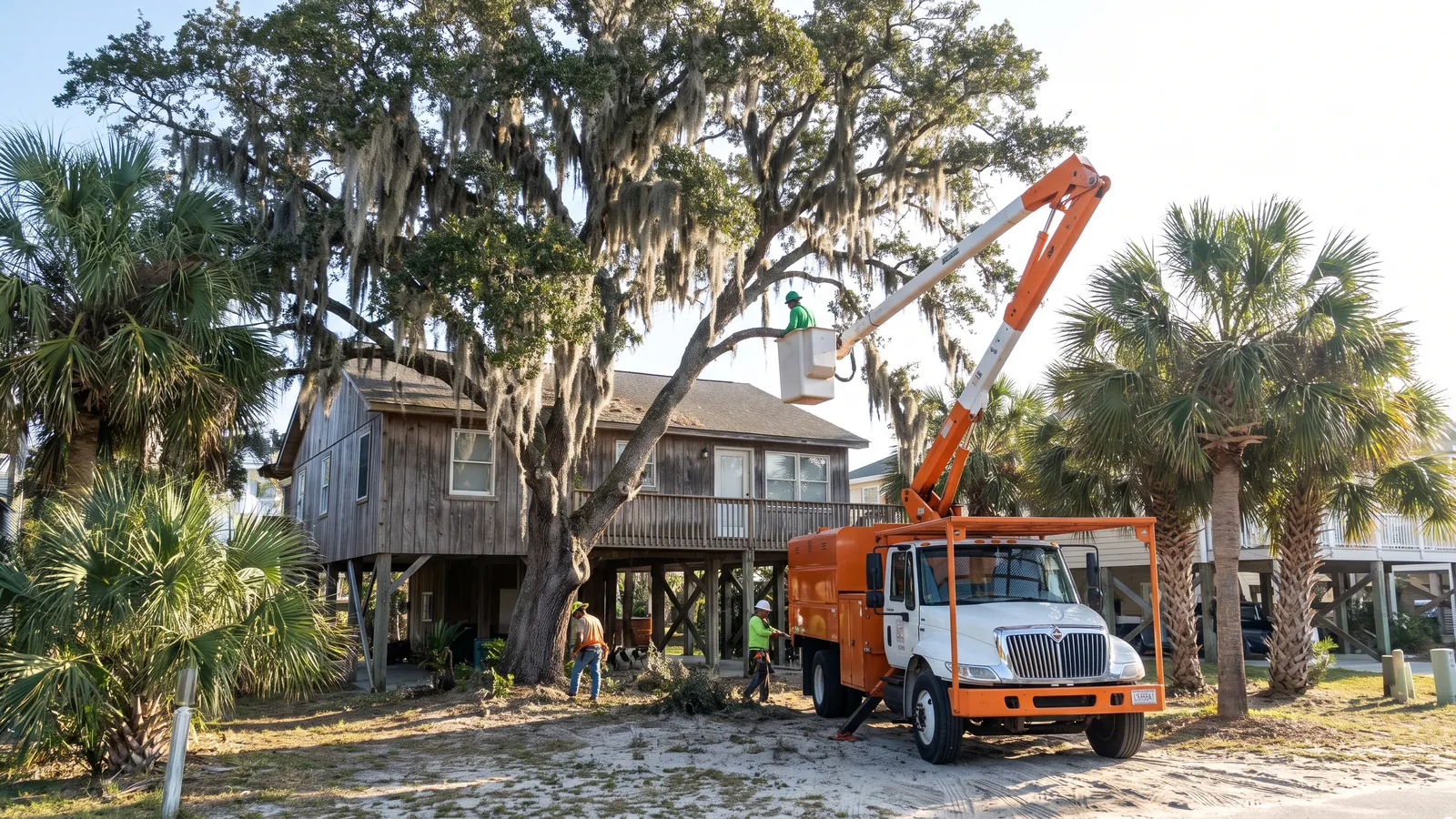
A tree company built for live oaks, loblollies and palmettos on sand
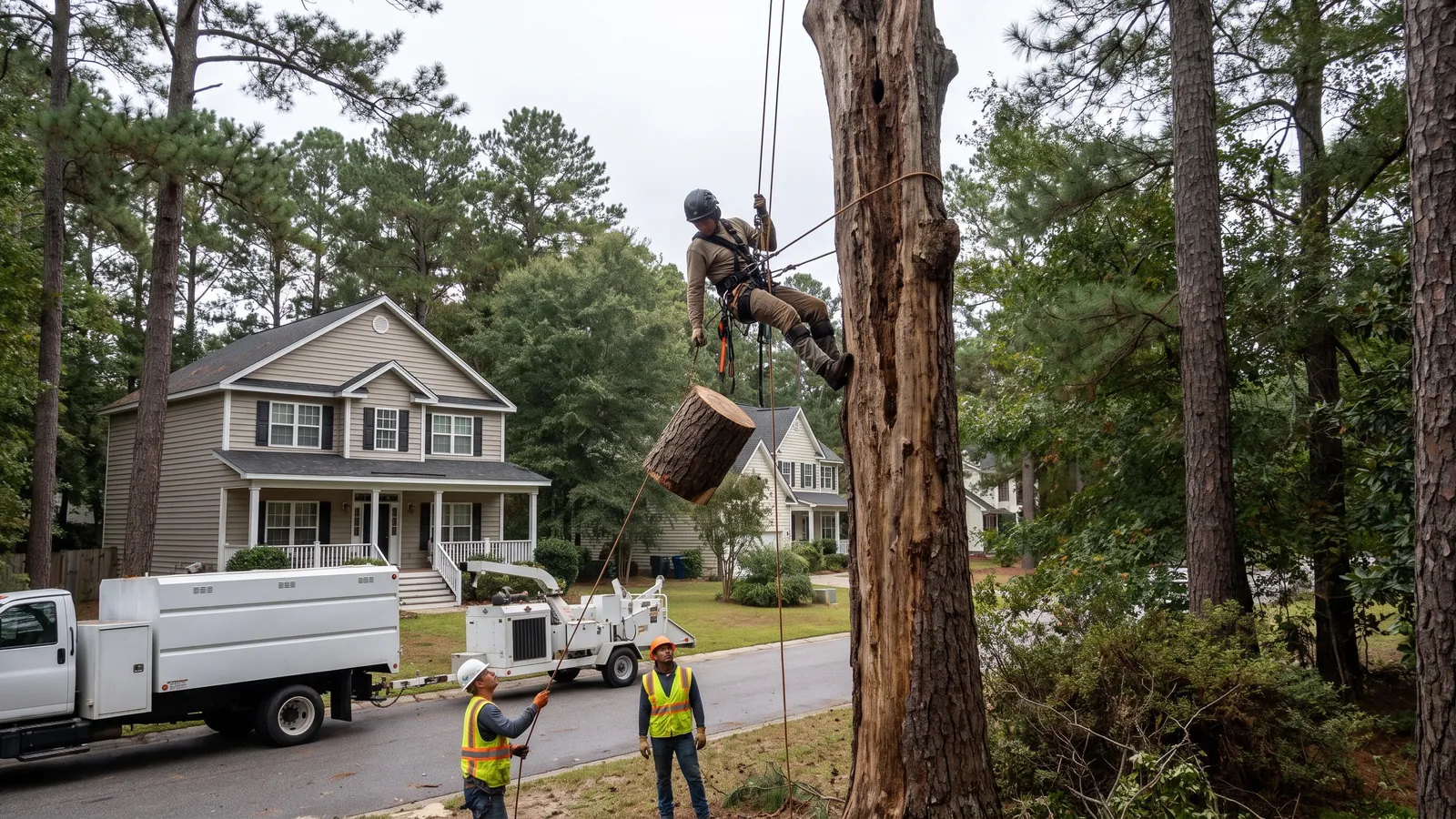
Tree removal
Dead pines, hollow laurel oaks, leaning water oaks, trees over the house — rigged down in pieces, chipped, hauled, raked, permit checked first.
Removal & pricing →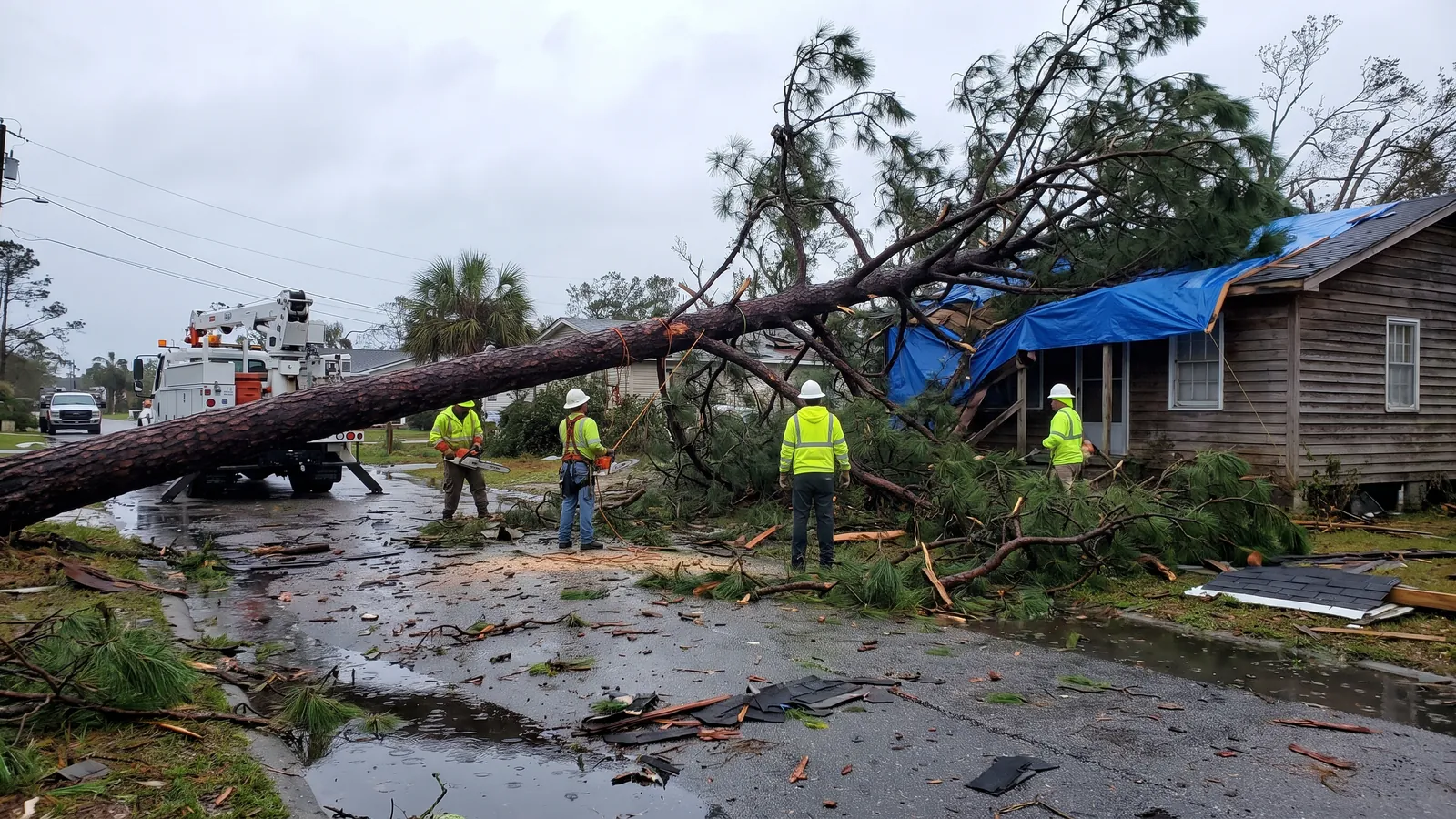
24/7 emergency tree service
A pine through the roof, an oak across the driveway, a limb on the service drop — dispatched by priority any hour, paperwork afterward.
Emergency service →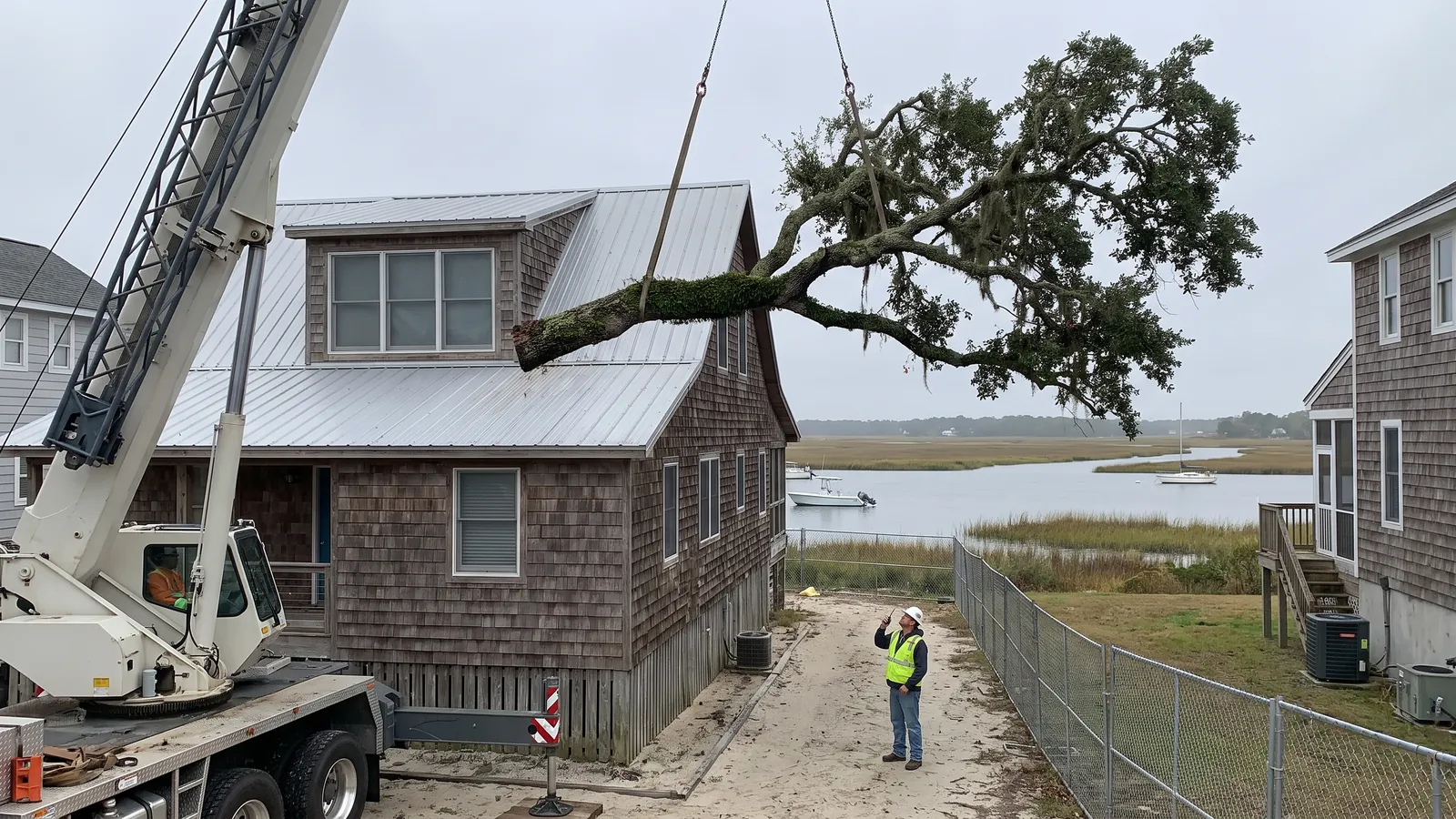
Crane tree removal
For the 90-foot pine over the pool or the oak between two beach houses on a 50-foot lot: lifted out in sections, nothing dragged across the lawn.
Crane work →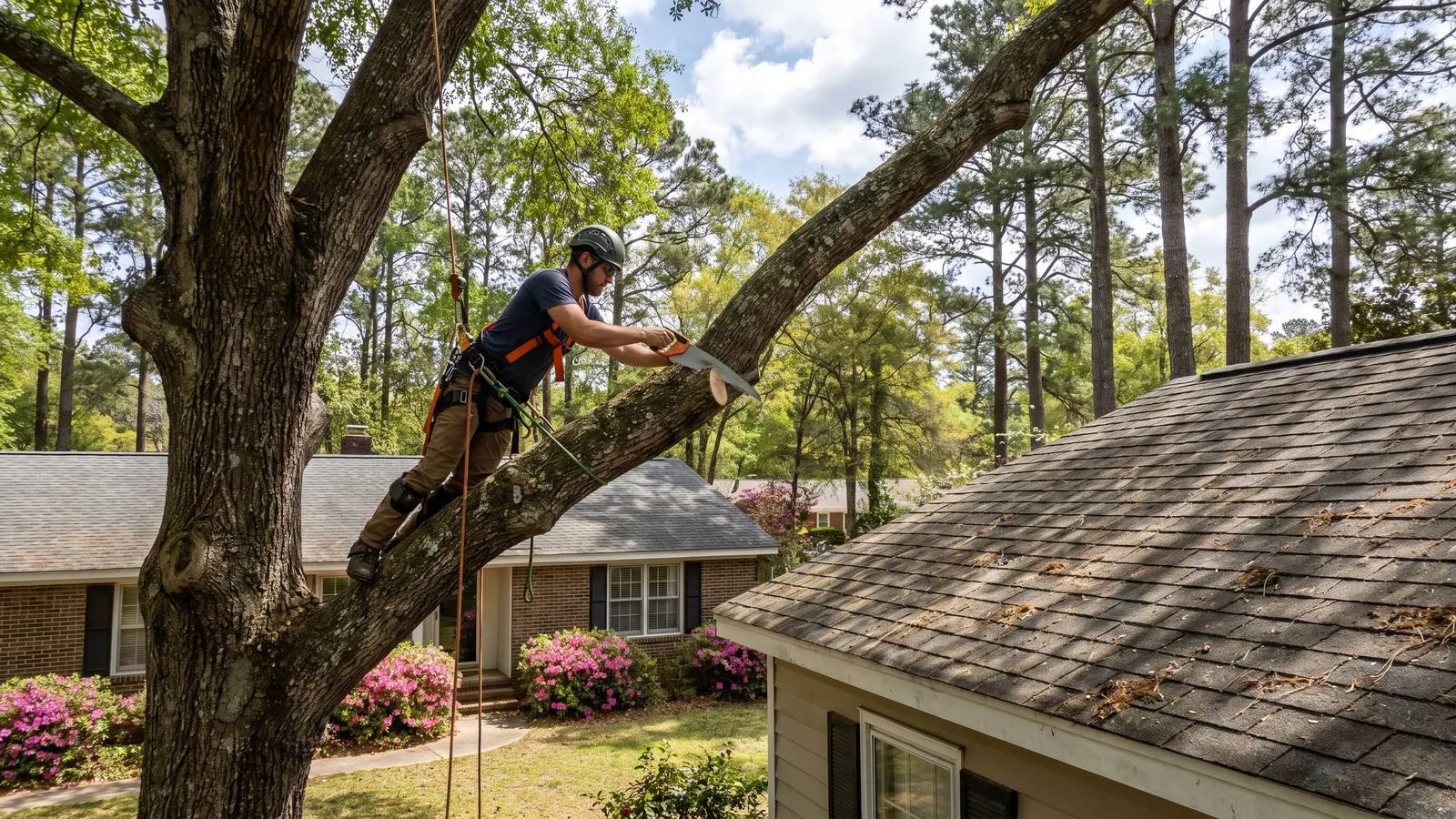
Tree trimming & pruning
Deadwooding, crown cleaning, clearance from the roof and the service drop — ANSI A300 standards, which Myrtle Beach writes into its ordinance. Never topping.
Trimming →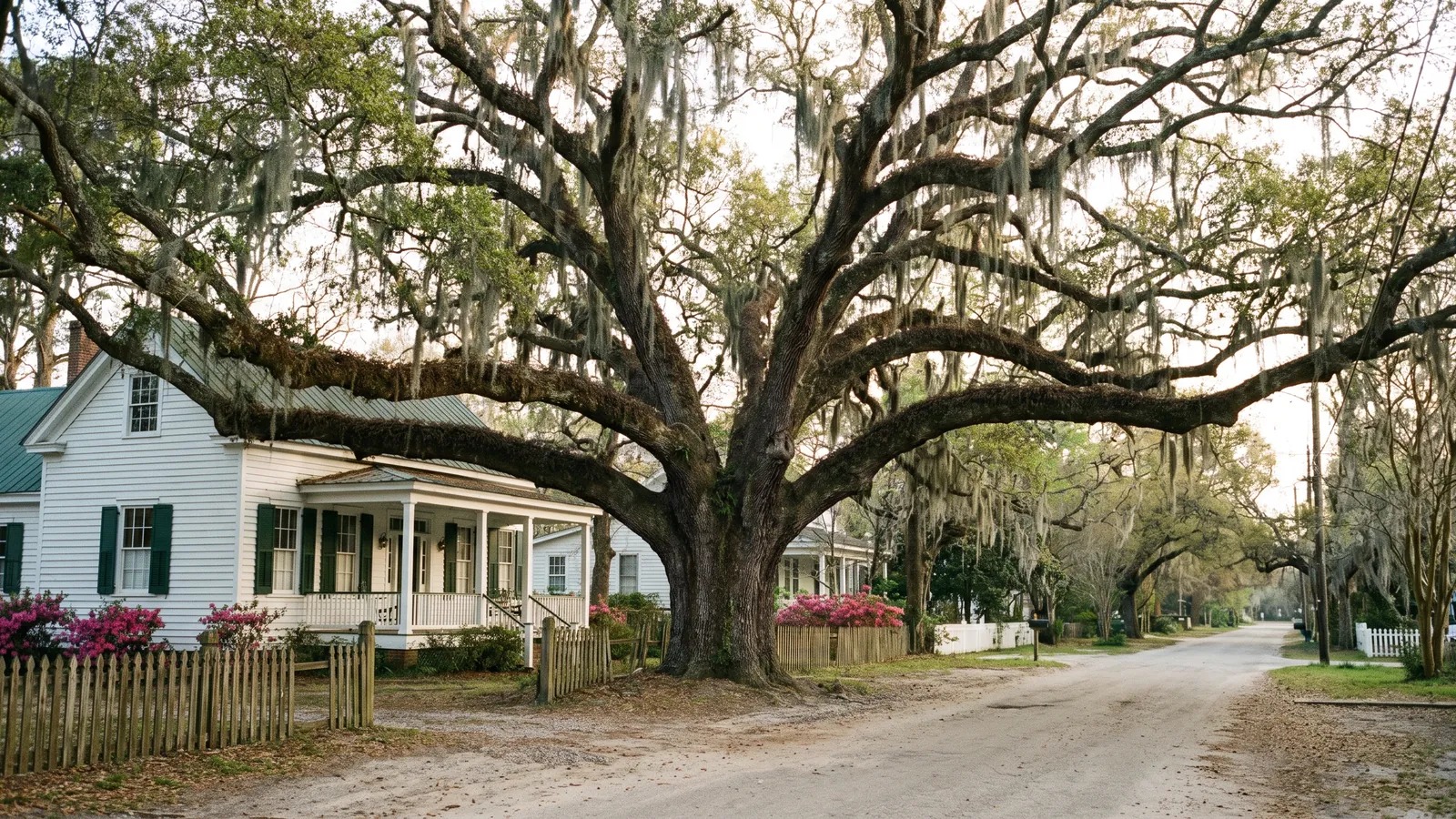
Live oak pruning & care
Preservation pruning for the landmark and specimen oaks of the Strand, root-zone protection, and the permit when pruning one needs it.
Live oak care →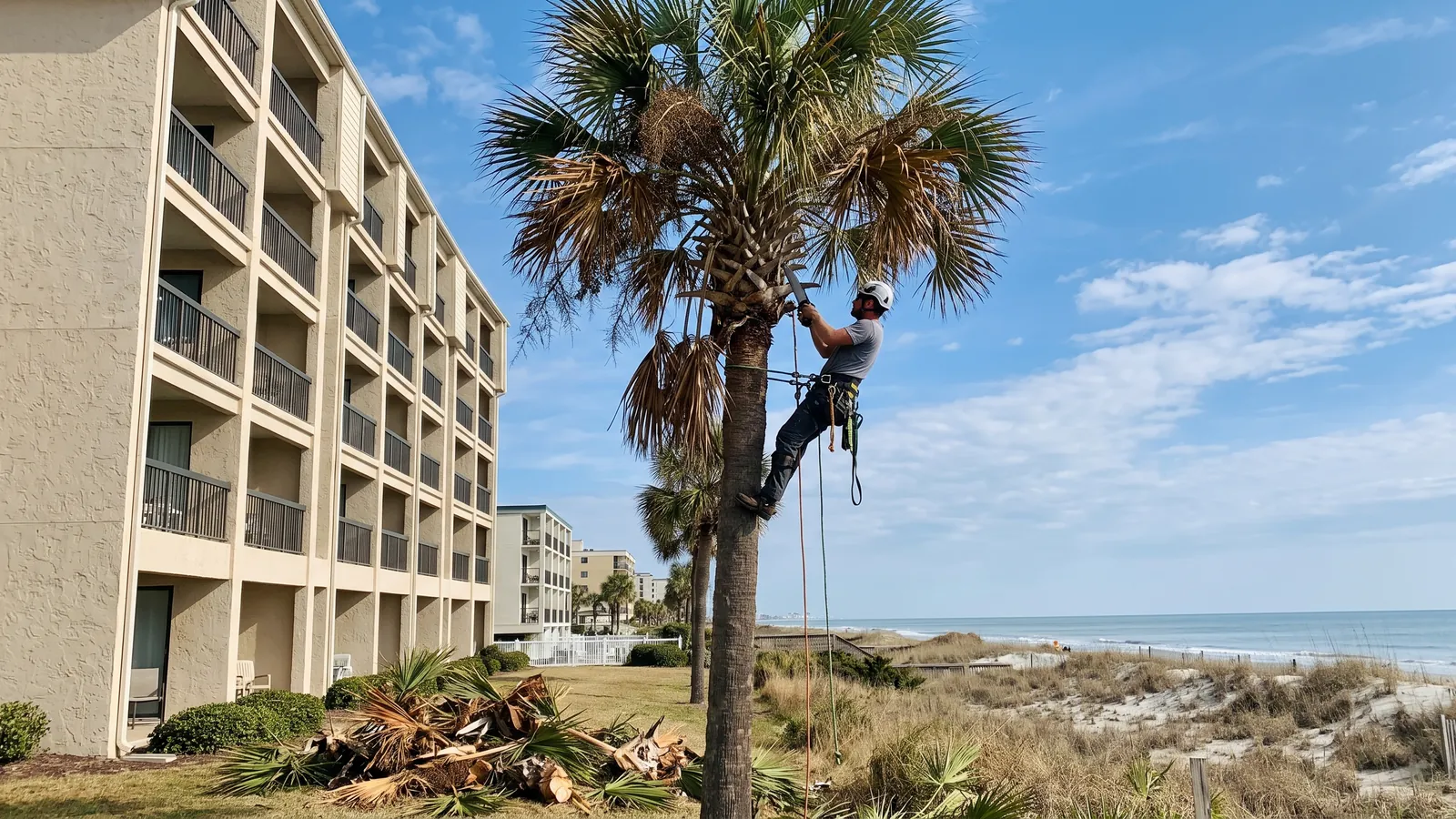
Palmetto & palm trimming
Sabal palmettos, Canary and Washington palms — dead fronds, boots and seed stalks only, no hurricane cuts, before the season.
Palm trimming →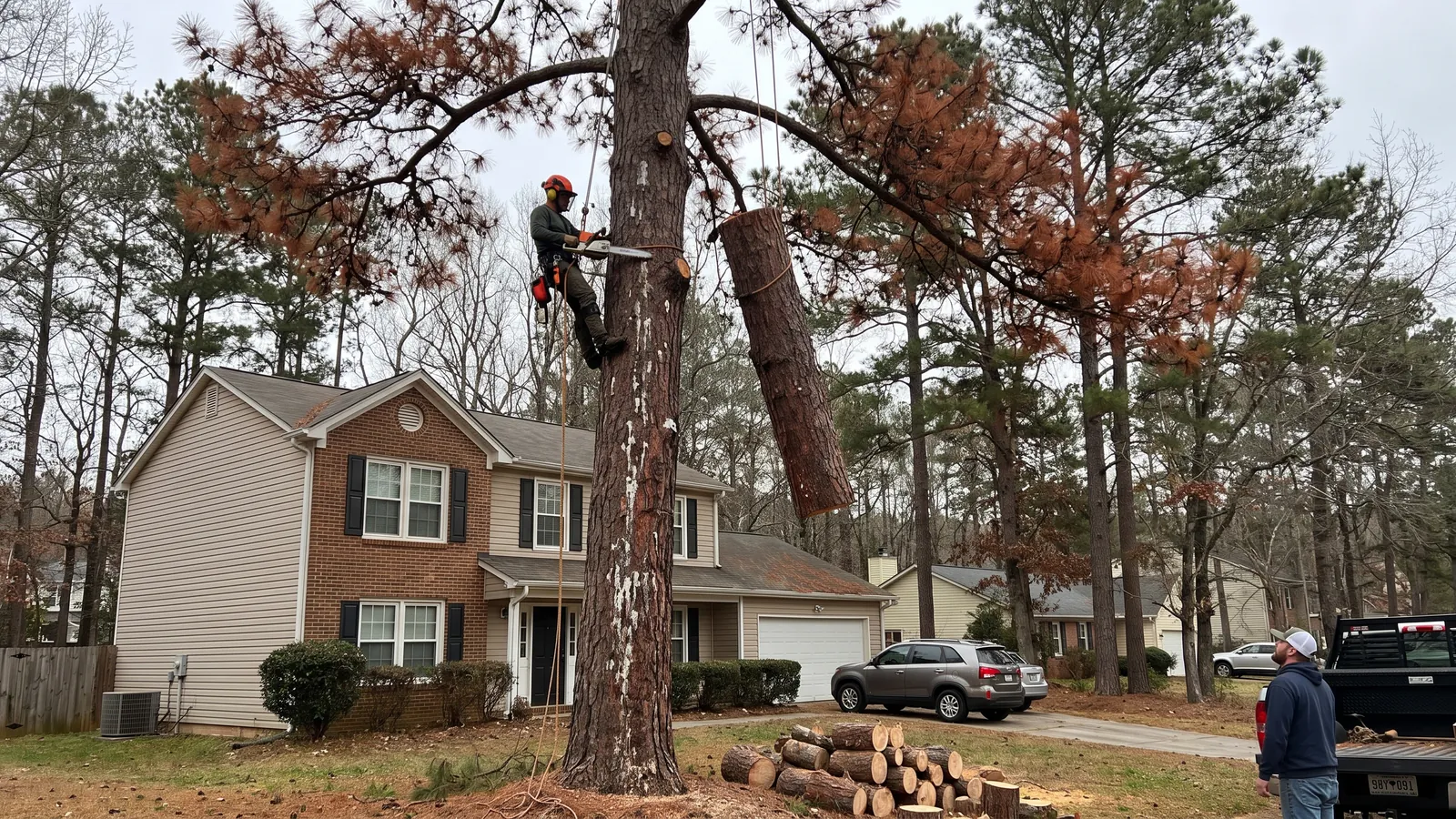
Pine removal & bark beetles
Red-needled loblollies with Ips beetles come down now; gray ones before the next storm. Lightning strikes assessed.
Pine removal →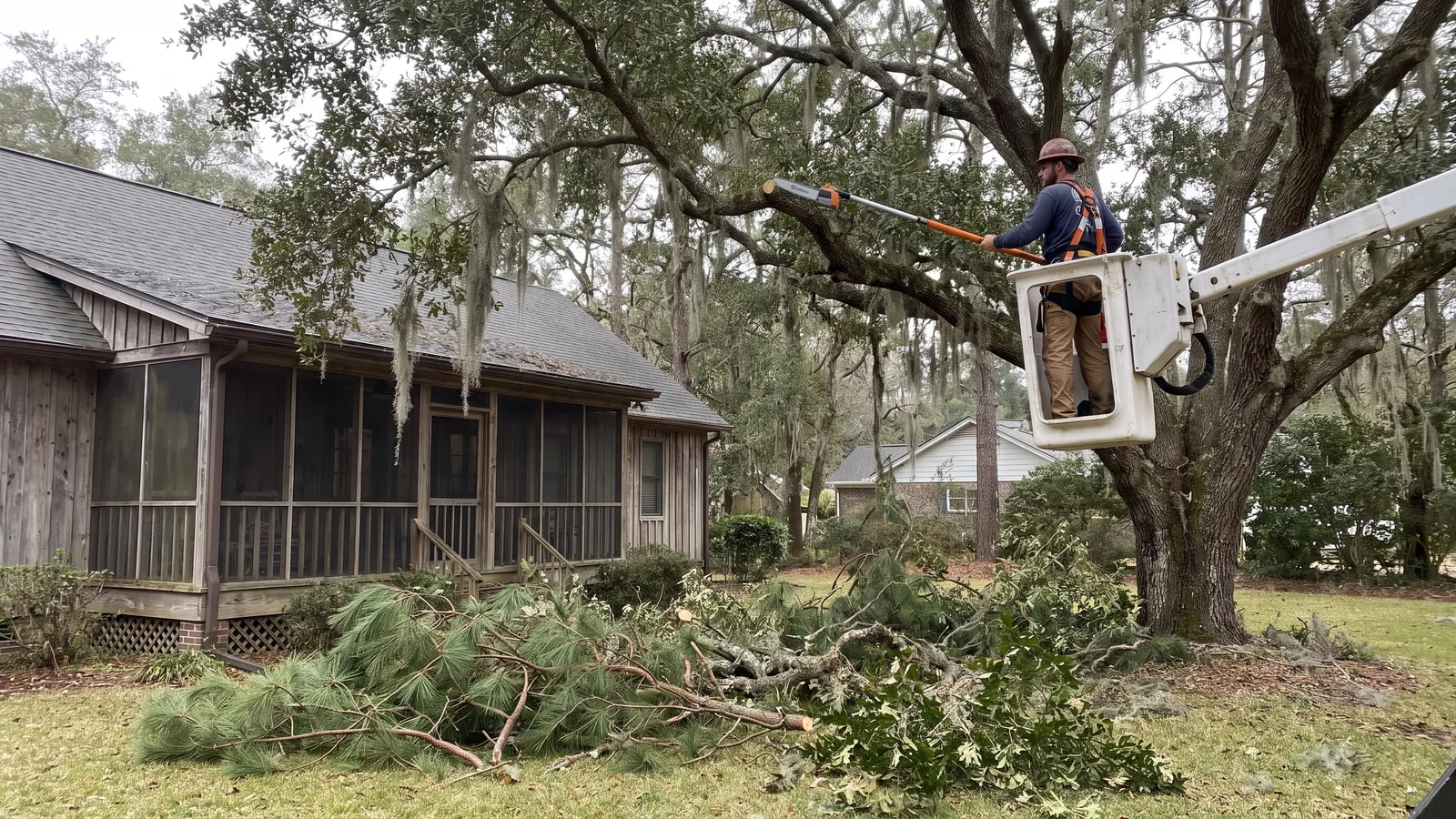
Hurricane tree prep
Canopy thinning, weight reduction over the roof, and the removals that should happen in May, not in the dark after a storm.
Hurricane prep →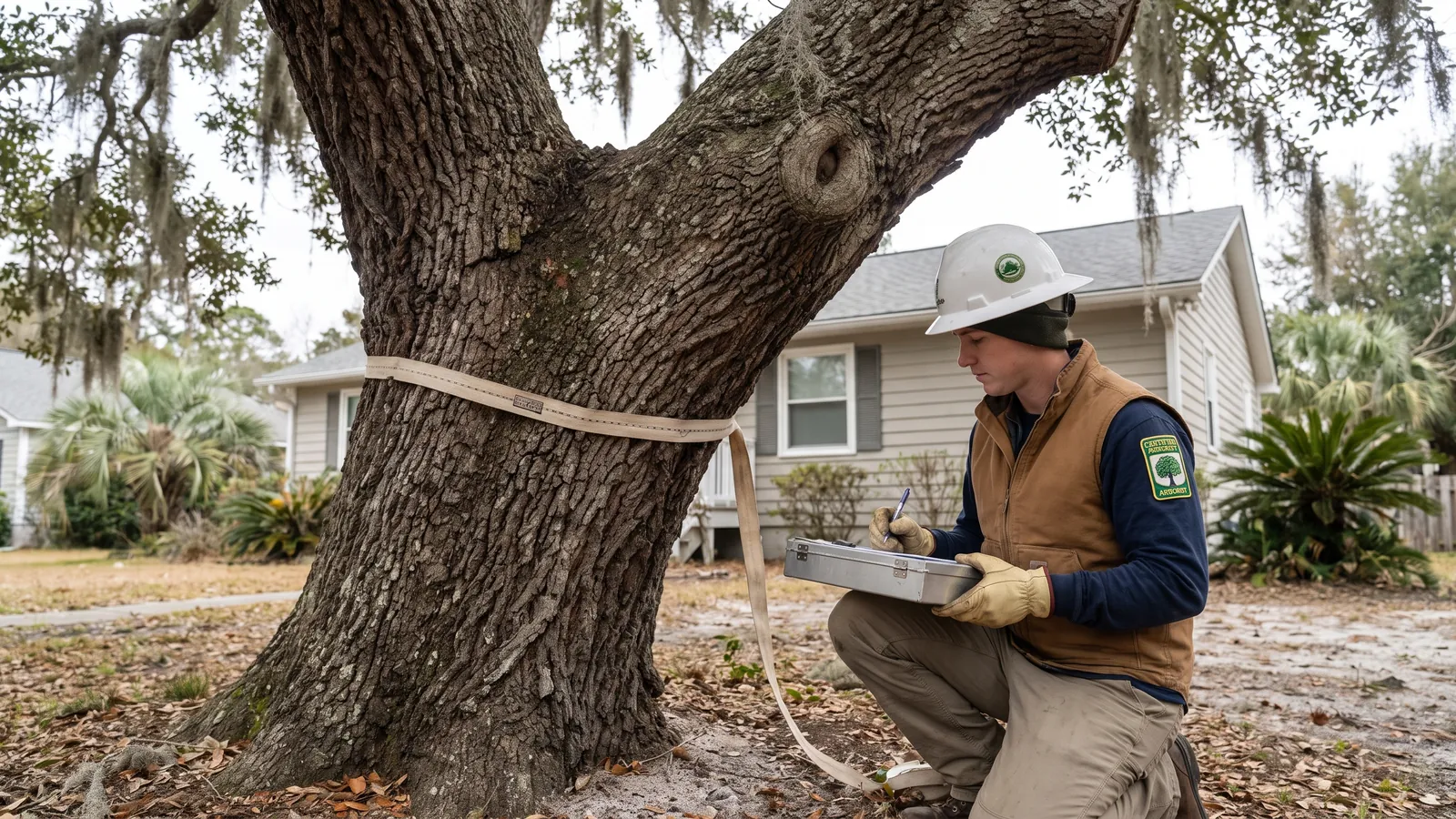
Tree permits & arborist reports
The application, the arborist letter, the mitigation math and the specimen-oak survey — handled for whichever town your tree is in.
Permits & reports →Three numbers that decide most Grand Strand tree calls
Sixty miles of beach, two counties, seven towns and the state's biggest concentration of tree ordinances. These are the numbers that matter when you're deciding whether a tree stays, gets pruned or comes down.
The live oak line in Horry County
Outside the city limits, a live oak 24 inches in diameter at breast height is a 'specimen live oak' — and since 2023 that rule covers single-family lots too. Removing one without a variance can block building permits on the parcel for two years. Inside Myrtle Beach the landmark line is 25 inches and the penalty is $10,000 per tree.
Per landmark tree, and the cutter pays too
Myrtle Beach's ordinance makes the property owner and the tree company both liable for an unpermitted landmark removal, and it counts topping as a removal. Surfside's fine is $10,000 per landmark tree; Georgetown County's is $500 per inch of trunk. This is why we check the parcel first and why the cheap crew that 'doesn't bother with permits' is expensive.
Florence's rain at Loris, 2018
The South Carolina tropical rainfall record. On the Strand the trees that fall after a hurricane usually aren't rotten — they're standing in sand with the water table at the surface. Saturated ground plus a 77 mph gust at Cherry Grove is how a healthy pine ends up on a roof, which is why hurricane prep here is about weight and lean, not just deadwood.
Four trees that keep our phone ringing
Beetle-killed loblollies
Ips engraver and black turpentine beetles hit pines stressed by lightning, drought, construction and storms. Needles go red, then gray; the tree is dead either way and sheds limbs for a year before it falls.
Pine removal →Laurel & water oaks
Planted because they grow fast, failing because they don't last: laurel oaks live 50 to 70 years and hollow out, water oaks rot by 50. Both rank at the bottom for wind resistance. The most common removal we do.
Removal →Live oaks
The best tree on the Strand — highest wind resistance, salt tolerant, centuries of life — and the most regulated. Landmark, specimen, Tree Board. Almost never a removal; nearly always a pruning and a permit question.
Live oak care →Palmettos & palms
The state tree needs almost nothing: dead fronds, boots and seed stalks, once a year. The 'hurricane cut' everybody sells is what makes palms fail. We prune to the horizontal and no higher.
Palm trimming →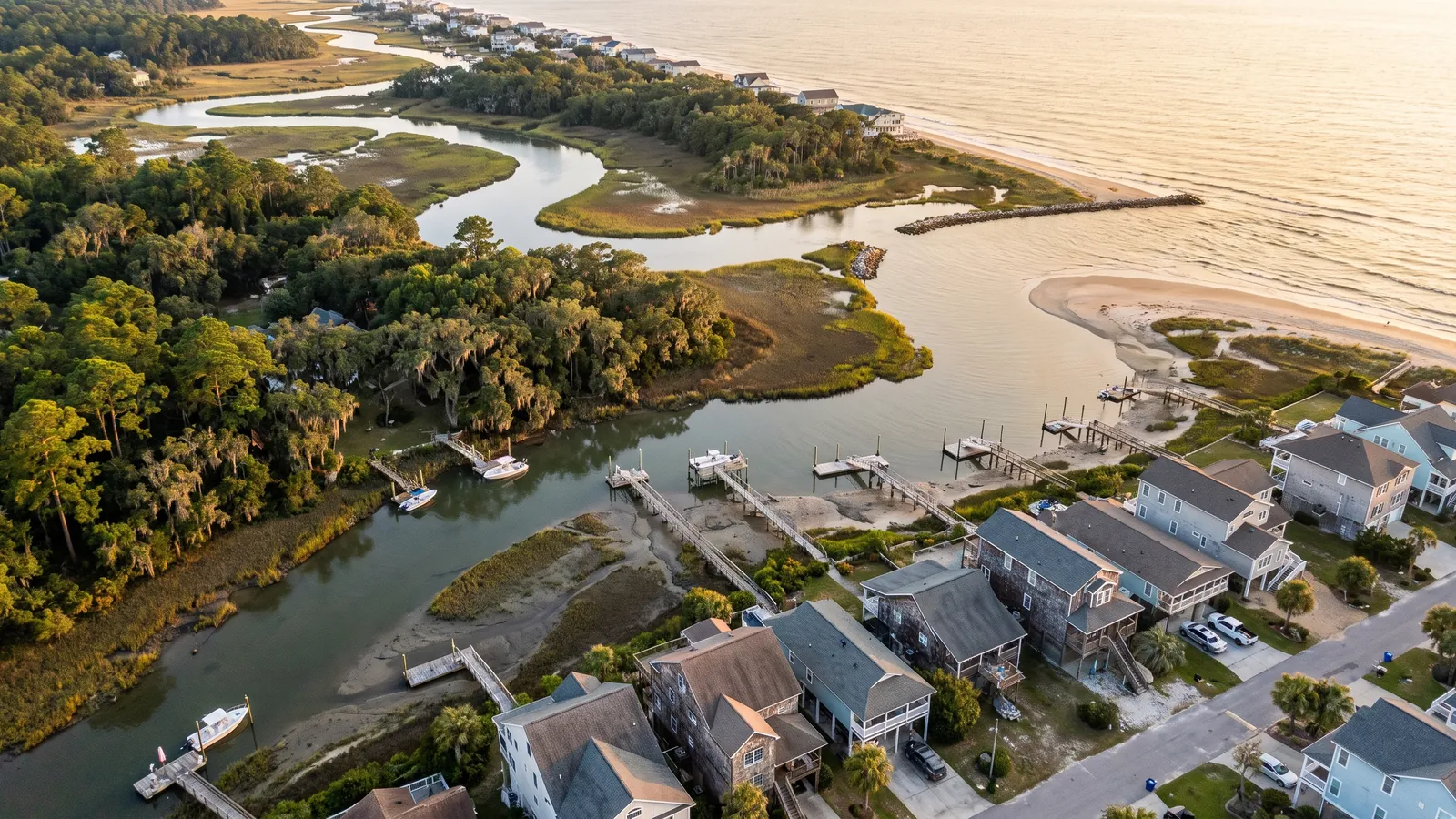
The Grand Strand is sixty miles of sand, salt, live oaks and the strictest tree rules in South Carolina
From Little River to Pawleys Island the coast is one long beach ridge: marine sands on the dunes, a hardpan with the water table a foot or two down behind them, 410 Carolina bays of peat inland, and the Waccamaw's river clay at Conway. Horry County grew more than 20 percent between 2020 and 2025 to 427,000 people — the fastest-growing metro in the Carolinas — and most of that growth went into pine flatwoods and old oak hammocks in Carolina Forest, Forestbrook, Socastee and the Little River corner. So the trees on the Strand are a mix: 300-year-old live oaks along the Waccamaw Neck and in Conway, loblolly and longleaf pines in every subdivision built since 1980, laurel oaks the builders put in because they grow fast, palmettos on the oceanfront, and the Bradford pears and Chinese tallows that are now illegal to sell.
And the towns protect them differently. Myrtle Beach wrote ANSI pruning standards into its code and fines $10,000 per landmark tree. Horry County made every 24-inch live oak a specimen in 2023 and tightened it again in June 2026. North Myrtle Beach lets you cut anything under 16 inches and exempts pines. Conway has a Tree Board, a map of its named oaks, and a story in its ordinance about Mrs. Mary Beaty standing off a railroad crew with a shotgun in 1887. Surfside Beach is rewriting its ordinance this year. Georgetown County protects everything over 10 inches on the Waccamaw Neck. A tree company that works the whole Strand has to know all of it, and we do.
Then the weather: Matthew's 74 mph gust at the airport in 2016, Florence's 77 at Cherry Grove and 80,000 outages in 2018, Isaias at 70 in 2020, Ian knocking out 70,000 Santee Cooper customers in 2022, Chantal coming ashore at Litchfield in July 2025, five inches of snow in January 2025, the 2009 Highway 31 fire that took 76 homes, and the Carolina Forest fire of March 2025 that started as a backyard debris burn. We do the boring things right: an arborist looks at the tree before anyone sells you a removal, every crew carries general liability and workers' comp, we rig over roofs instead of dropping, we call 811 before we grind a stump, we haul our own debris because the city won't, and we answer the phone the morning after the storm.
Four steps, no surprises
Call or send the form
A leaning pine, a hollow oak, a palm that's dropping fronds on the car, a limb on the roof — tell us what you're seeing and which town you're in. We answer around the clock.
An estimator walks the property
Usually within a day or two. They measure the trunk, read the species, the lean, the root flare and the decay, check your town's threshold, and tell you whether the tree really needs to come down.
Written, itemized price
Removal, trimming, crane, stump grinding, haul-off, permit — every line. No deposit until you approve and we schedule.
Done in a day, raked like we weren't there
Most residential jobs are a day. Everything chipped and hauled, the lawn raked, the stump ground if you asked, photos sent the same evening.
From Grande Dunes and Pine Lakes to Conway, Pawleys and the whole Strand
We're across Myrtle Beach every week: the north end from Grande Dunes to Arcadian Shores and Dunes Club, the oceanfront and the 1920s canopy of Pine Lakes, the Market Common and the south end, Forestbrook and Socastee along the Waterway, and the pines of Carolina Forest.
Beyond the city we cover North Myrtle Beach and Cherry Grove, Conway and its landmark oaks, Surfside Beach and Garden City, Murrells Inlet, Pawleys Island and Litchfield, Little River and Longs, and Loris and Aynor — the whole of Horry County and the Waccamaw Neck of Georgetown County.
See the full service area →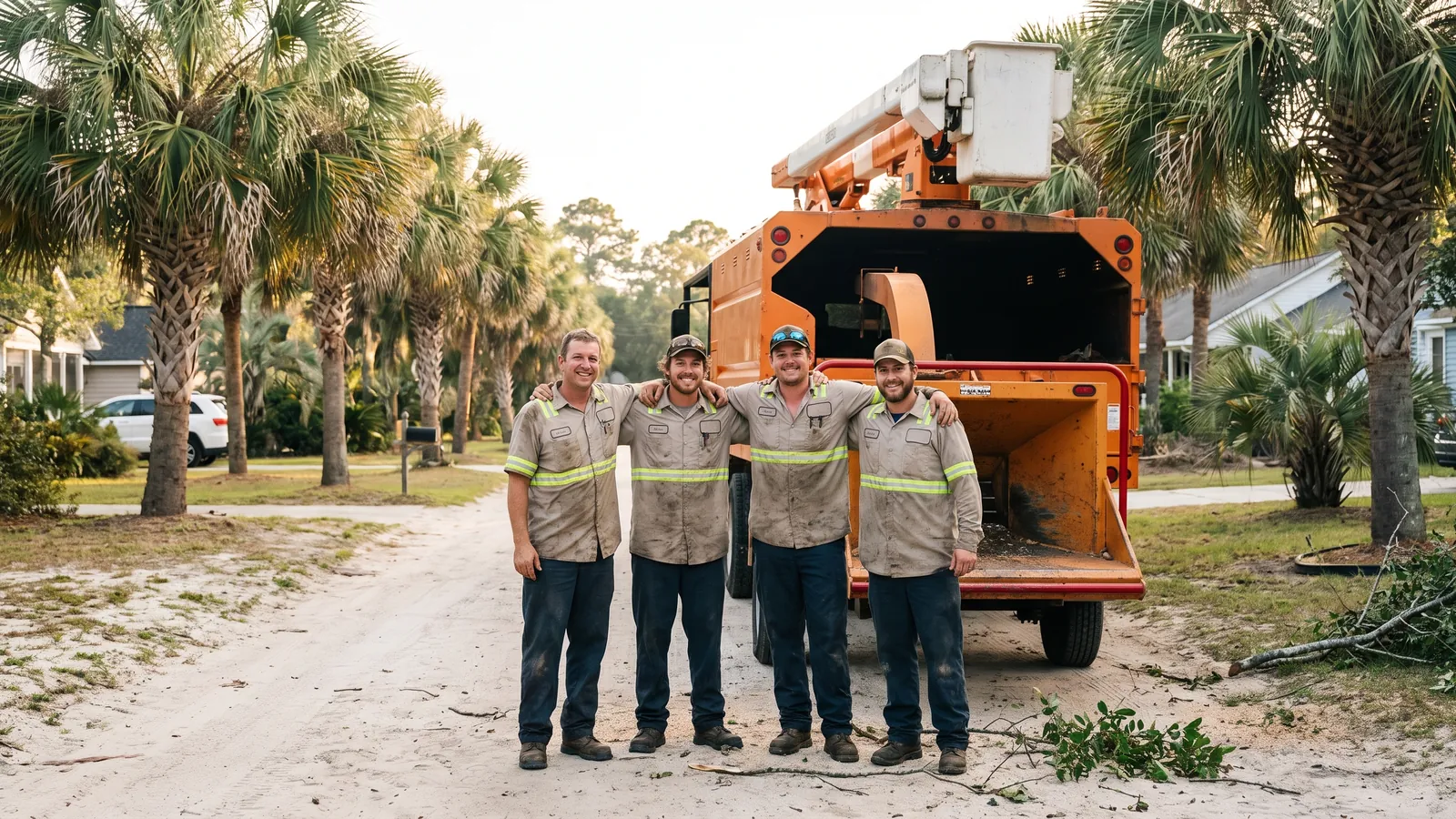
Questions Grand Strand homeowners ask us
How much does tree removal cost in Myrtle Beach?
In 2026 most Grand Strand removals run $350 to $1,500, with the average around $750. By height: a tree under 25 feet is $200–$600, a 25-to-50-foot laurel oak or pine $500–$1,300, a 50-to-75-footer $1,200–$2,800, and an 80-foot loblolly or a big live oak over a house $2,500–$5,000 or more. Palmettos run $200–$900, crane jobs $2,500–$7,500, and stump grinding $3–$5 per inch of diameter with a $100–$150 minimum. Every price we give is in writing after an estimator has walked the property.
Do I need a permit to remove a tree in Myrtle Beach?
It depends on the tree and which town you're in, and the rules on the Grand Strand are stricter than most people expect. Inside the City of Myrtle Beach a single-family lot only needs a permit for 'significant' trees — live oak, white oak, red cedar, magnolia and bald cypress four inches or more in diameter — and a live oak 25 inches or bigger is a 'landmark' that carries a $10,000-per-tree penalty if it comes down without approval. Unincorporated Horry County protects every live oak 24 inches and up, even on house lots. North Myrtle Beach lets you cut anything up to 16 inches without a permit and exempts pines entirely. Conway, Surfside Beach, Georgetown County and Pawleys Island each have their own thresholds. We check the parcel before we cut; see the town-by-town guide.
Which trees fail here in hurricanes?
Laurel oaks, water oaks, pecans, Bradford pears and Chinese tallow are at the bottom of the wind-resistance rankings; live oaks, sand live oaks, sabal palmettos, magnolias and bald cypress are at the top. Live oaks came through Florida's worst hurricanes at 91 to 96 percent survival. The twist on the Strand is the ground: our sands sit on a water table a foot or two down, so a well-rooted pine or oak can go over whole once the soil is saturated. Florence dropped more than 23 inches of rain on Loris, and the trees that fell afterward weren't rotten — they were floating.
Can you take down a live oak?
Only when it has earned it, and only with the right paperwork. On the Grand Strand a big live oak is protected almost everywhere — landmark status in Myrtle Beach at 25 inches, specimen status in Horry County at 24 inches, Tree Board approval in Conway, a permit at 10 inches on the Waccamaw Neck. Our ISA Certified Arborist assesses the tree, and if it's hazardous, diseased or declining we document it and handle the permit. If it isn't, we tell you so, and we prune instead. Most live oaks people want removed only need their deadwood taken and their weight reduced over the roof.
What happens to my dead pine if I leave it?
Loblolly and longleaf pines along the Strand get hit by Ips engraver beetles and black turpentine beetles after lightning, drought, construction damage or a storm. A pine whose needles have turned red or brown is already dead. It dries, the roots rot in the wet sand, and it falls in the next storm toward whatever is heaviest beneath it. Red needles with pitch tubes on the bark means remove it now, before the beetles emerge into the next pine; gray needles means the beetles have moved on and the tree is just a hazard to deal with.
Do you really answer at night?
24 hours a day, every day, including the morning after a hurricane. If a pine is through the roof at 2 AM, call — a person picks up, a crew is dispatched by priority, and the paperwork happens after the tree is off the house.