The pines we have
The Grand Strand was pine flatwoods — loblolly and longleaf on the sands, pond pine in the bays — and the subdivisions of the last forty years were built under those trees. Loblolly (Pinus taeda) is the common one: fast, tall, 80 to 100 feet over a house in Carolina Forest or Forestbrook, with a shallow, wide root system in our sand. Longleaf (P. palustris) is the better one: slower, deeper-rooted, the most wind- and drought-tolerant pine we have per Clemson, and the one Georgetown County protects on the Neck. Both get into trouble the same way — something stresses the tree, and the beetles find it.
What stresses a pine on the Strand
- Lightning. South Carolina ranks 13th in the country for lightning density, and the pine is the tallest thing in the yard. A strike that spirals the bark off the trunk is usually fatal within a year; a single narrow scar sometimes isn't.
- Storms. A hurricane in saturated sand racks the root plate loose without tipping the tree. It looks fine; it's dying.
- Construction. A loblolly's roots spread wide and shallow, and the trencher for the new driveway or utility line next door cuts a third of them. The stressed pine draws beetles within the season — the most common pine death in the growth corridors of Carolina Forest, Little River and Longs.
- Drought and fire. The 2009 Highway 31 fire and the 2025 Carolina Forest fire both left standing, scorched pines that the beetles took the following year.
The beetles
The South Carolina Forestry Commission names the two that matter. Ips engraver beetles attack pines already damaged by lightning, fire or storms, and leave dime-sized pitch tubes — creamy white to reddish — on the trunk, or reddish boring dust in the bark crevices where the tree couldn't push pitch. The Commission's advice is to salvage promptly: an infested pine chipped and hauled before the brood emerges protects the neighbors' pines. Black turpentine beetles work the lower trunk, from the ground to about twelve feet, and leave quarter-sized reddish-purple pitch tubes. Loblolly also suffers fusiform rust and butt rot. The southern pine beetle, the one that kills whole stands, is a different animal and mostly a forestry problem.
The needle-color rule
This is the thing to remember. Green needles with pitch tubes on the trunk: the beetles are in it now and the tree is dying — remove it quickly, before they emerge. Red or brown needles: the tree is dead, the beetles are probably still inside, and it should come down now for the same reason. Gray needles, bark sloughing: the beetles have been and gone, the tree is just a standing hazard that will drop limbs for a year and then fall — schedule it before hurricane season. A pine that's 'turning' from the top down after a strike is in the first category. A pine that's losing older needles from the inside of the crown in the fall is just being a pine.
Removal, and the good news about permits
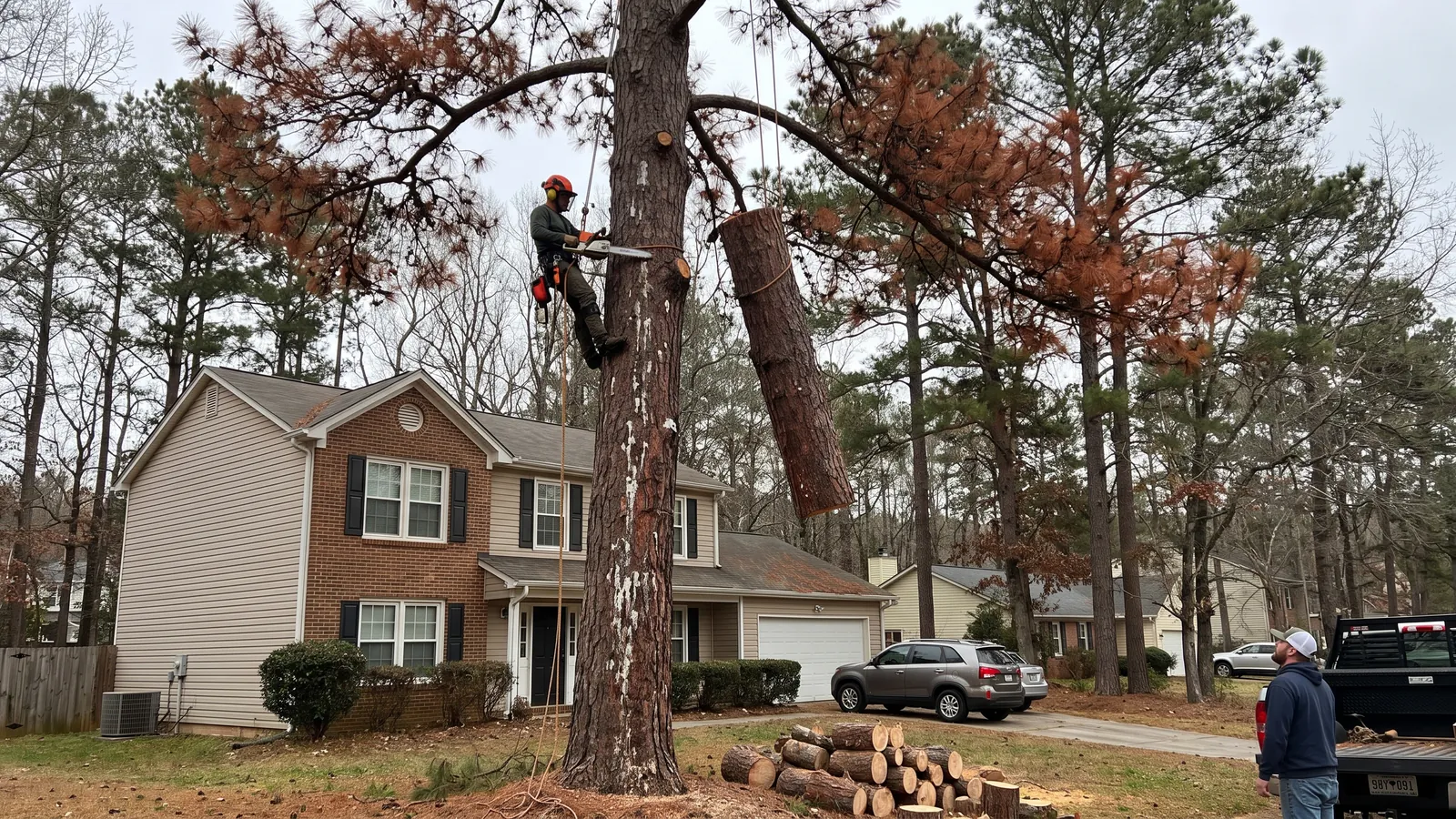
A dead pine on a Strand lot usually has no drop zone, so it comes down in sections — rigged by a climber over the roof, or lifted out by crane over the pool, with several neighbors' pines sharing the crane day if the beetles have been through the whole street. The good news is the permits: North Myrtle Beach exempts pines of any size; Georgetown County exempts every pine but longleaf; Myrtle Beach regulates pines only over 18 inches on non-residential lots; Horry County's house-lot rule is live oaks only; Conway regulates oaks and listed hardwoods. A dead loblolly over a house is almost never a permit problem anywhere on the Strand. The stump rots fast if you'd rather leave it; we grind it if you wouldn't.
Common questions
A pine was hit by lightning in July and looks fine in September.
Watch it through next spring. A spiral scar is usually fatal within a year; a single narrow one often isn't. Pitch tubes or fading needles mean beetles found it. We'll look for free and tell you whether to wait.
Can I spray for the beetles?
Not effectively once they're in the tree. Prevention is keeping the pine unstressed — water through a drought, protect the roots through construction, remove the infested neighbor promptly. Salvage is the Commission's advice.
Why did three pines on my street die the same year?
Beetles emerging from the first one into the next, or the same lightning storm, or the same construction trench. Removing the first infested pine quickly is how you keep it at one.
How much does a dead 80-foot pine over the pool cost?
By crane, $2,500–$5,000; rigged in sections where there's room, $900–$2,000. Several on one street share the crane day.
Related: Pine removal · Crane removal · Hurricane prep · Carolina Forest