Hurricane tree prep on the Grand Strand — do it in May, not in the dark
Florence, Matthew, Isaias, Ian and Chantal all put trees on Grand Strand houses. The ones that fell were mostly predictable: the wrong species, too much weight over the roof, dead wood, and roots in sand that was already full of water. Here's what to do before June 1.
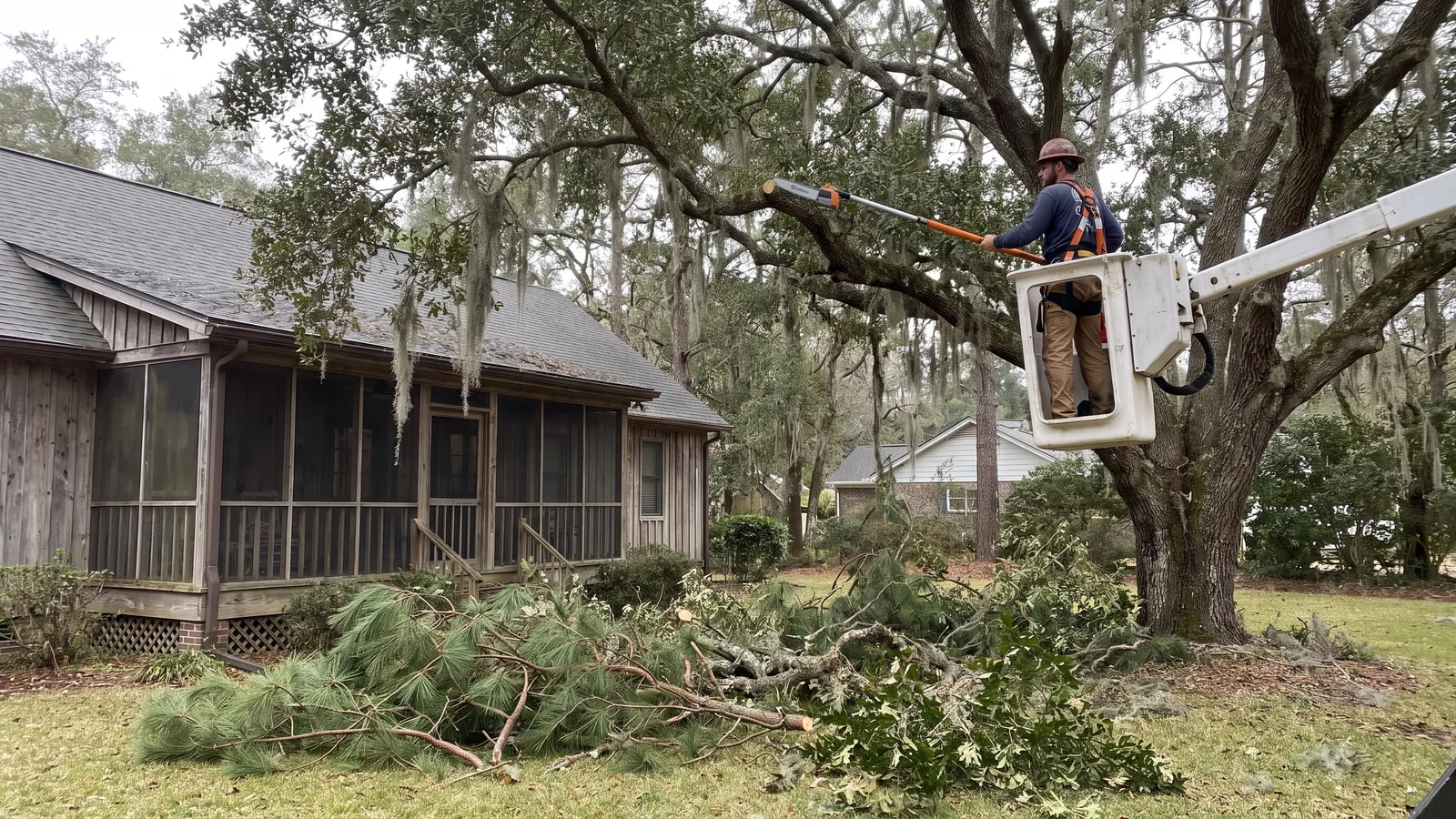
The Strand's storm record is long and specific. Hugo in 1989 pushed a 13-foot surge into Garden City and Surfside. Matthew gusted to 74 at the airport in October 2016 and spun an EF0 through North Myrtle Beach. Florence sat over the Carolinas for three days in September 2018, gusted to 77 at Cherry Grove, dropped 23.63 inches on Loris — the South Carolina record for a tropical system — and left 80,000 customers in the dark. Isaias hit 70 at Crescent Beach in 2020. Ian put 70,000 Santee Cooper customers out in 2022. Chantal came ashore at Litchfield at four in the morning on July 6, 2025. And Helene, which never came near the coast, still took an estimated one to four percent of South Carolina's tree canopy in a day, mostly water oaks, pecans, Bradford pears, maples and pines, because — Clemson's words — saturated soils let the wind uproot even well-rooted trees.
That last point is the whole story on the Strand. Our sands sit on a water table a foot or two down behind the dunes, with a hardpan under the Leon soils that keeps the water from draining, and a hurricane here is a rain event before it's a wind event. So hurricane prep on the coast is about three things: species (laurel oak, water oak, pecan, Bradford pear, Chinese tallow and Leyland cypress rank lowest for wind resistance; live oak, sand live oak, palmetto, magnolia, bald cypress and crape myrtle rank highest), weight and lean (a long limb over the roof or a trunk already leaning toward the house is what fails when the roots are floating), and dead wood (the limbs that come down in a 40 mph gust before the storm even arrives). We walk the property in spring, rank the trees, thin and reduce the ones worth keeping, and schedule the removals — the beetle-killed pine, the hollow laurel oak over the bedroom — for May, when a crane is available and the permit office is open, instead of October, when everyone on the Strand is calling at once.
What's included
Spring property walk
Every tree ranked: species, lean, dead wood, weight over structures, root condition in the sand.
Crown thinning
Wind moves through a thinned canopy instead of pushing on a sail; done to ANSI A300, never topped.
Weight reduction
Long limbs over the roof, the pool and the driveway shortened back to laterals.
Deadwooding
The limbs that come down in the first gust, removed on our schedule.
Pre-season removals
Dead pines, hollow laurel oaks and leaning trees over bedrooms taken down in May, with the permit, not in the dark.
Palms & palmettos
Dead fronds and seed stalks only — a full crown sheds wind; a hurricane-cut palm snaps.
Hurricane tree prep cost in Myrtle Beach, SC
| Job | Typical price | Notes |
|---|---|---|
| Hurricane-prep thinning and weight reduction, per tree | $300 – $1,200 | Mature oaks and pines |
| Deadwooding, per tree | $200 – $800 | Large live oaks at the top of the range |
| Whole-property prep walk and plan | Free with estimate | Trees ranked, written plan |
| Pre-season hazard removal | Quoted in writing | See removal and pines |
| Palm cleanup, per palm | $100 – $500 | See palms |
These are 2026 Grand Strand ranges so you can budget. Your written price is itemized — the climb or bucket work, rigging, chipping and haul-off, stump grinding, crane time, the permit for your town — and good for 30 days.
Recent work
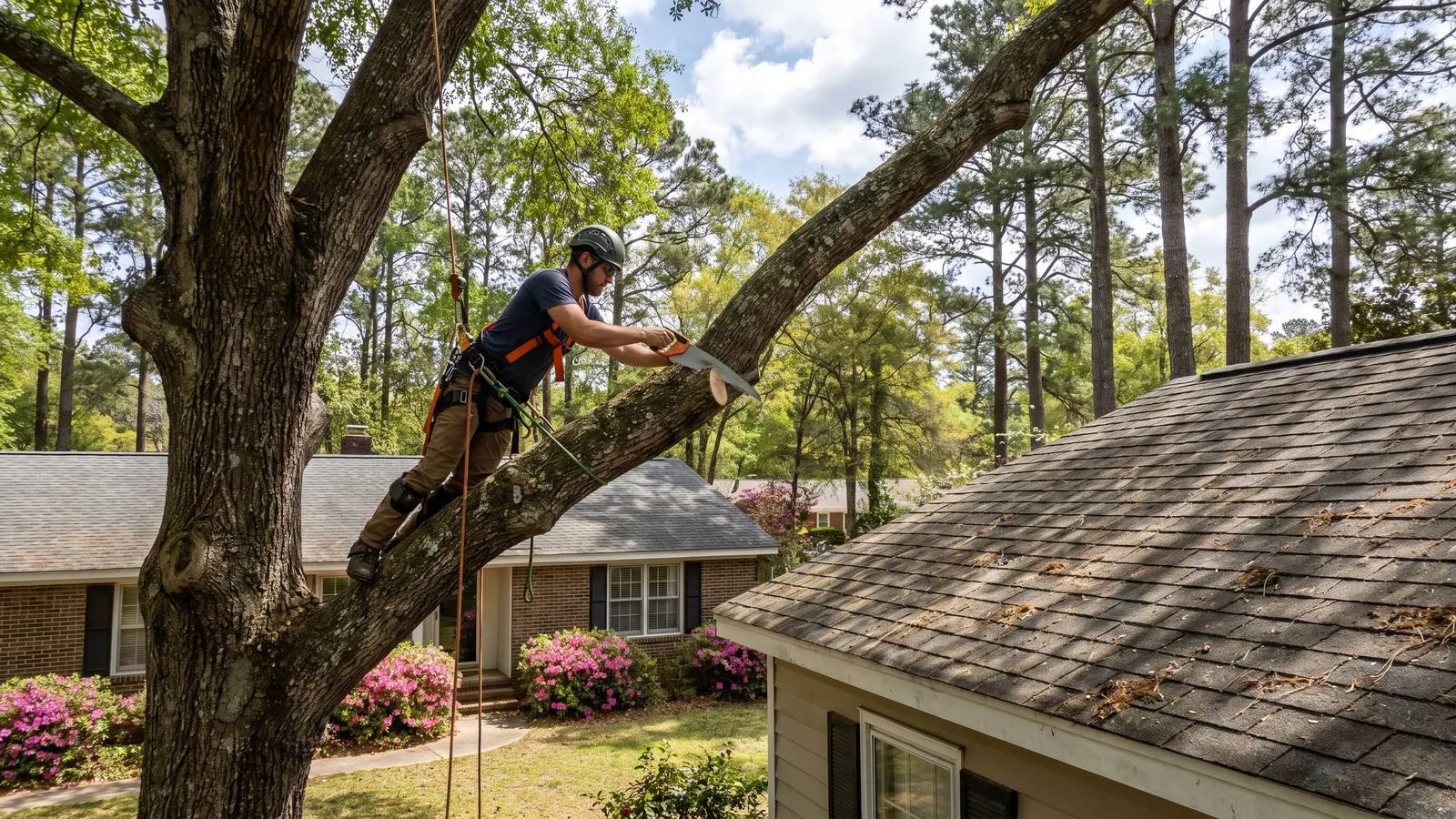
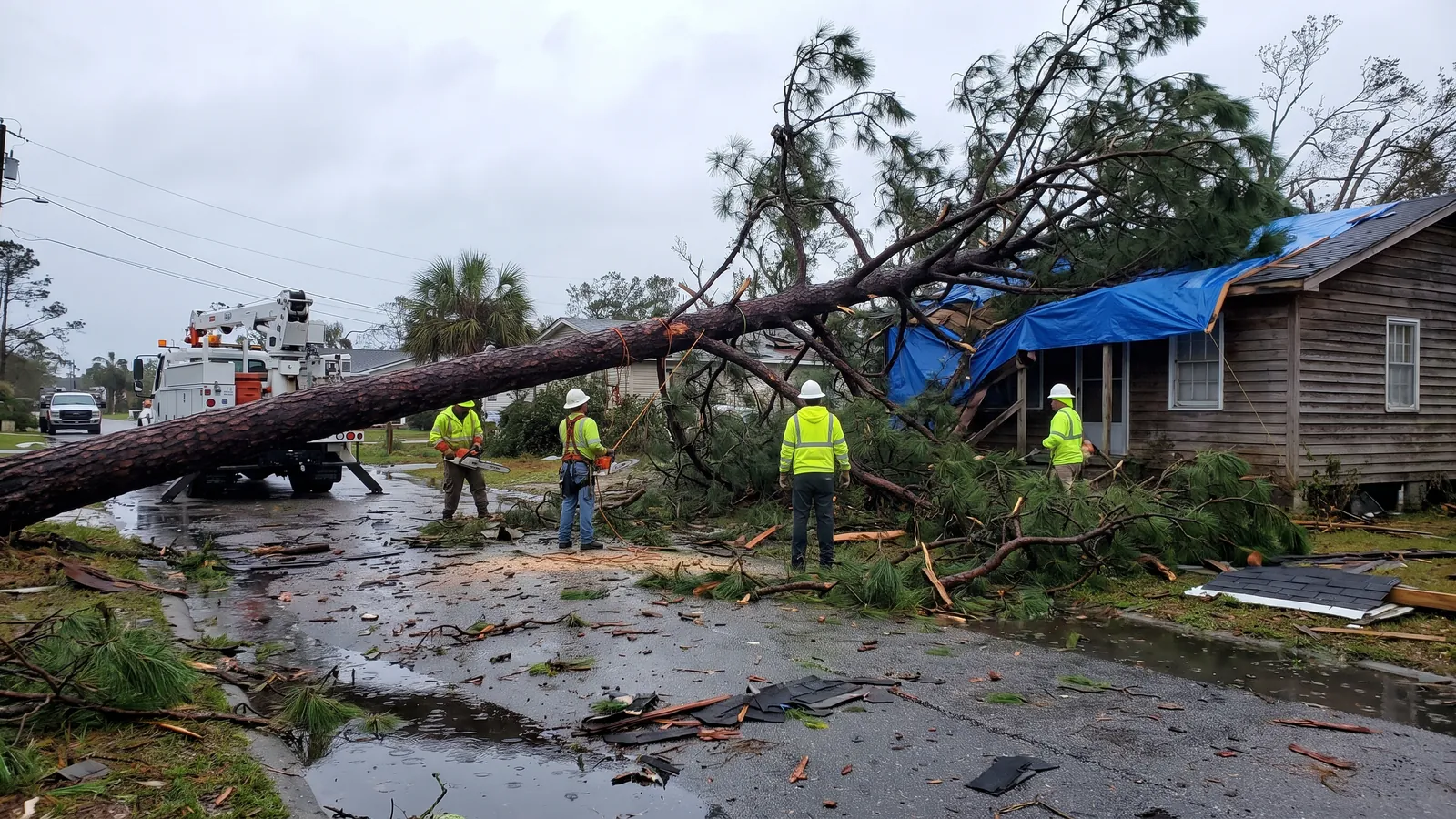
Questions we get about hurricane tree prep
When should I do this?
March through May. The crews and the cranes are available, the permit offices aren't buried in storm waivers, and the canopy is set before June 1. Call in September and you're in line behind everyone who waited.
Which trees should I worry about?
In order: a dead or beetle-hit pine over the house; a laurel or water oak over 50 years old over anything; a Bradford pear or Chinese tallow near a structure (they split); any tree with a new lean after the last storm; any long limb over the roof. A healthy live oak or palmetto is the tree you want.
Should I top my trees for hurricane safety?
No. Topping makes a tree more likely to fail, not less, and in Myrtle Beach topping a protected tree is an unauthorized removal with a fine. Thinning and weight reduction are the real work.
Does the water table really matter?
More than anything. A pine with a sound root system goes over whole when the sand it's standing in turns to soup. That's why hurricane prep here is about lean and weight, not just dead wood — and why we look at how your lot drains.
What about the trees I can't afford to do this year?
We rank them and give you the list. Do the pine over the bedroom first, the oak over the driveway next year.