Storm cleanup and debris removal on the Grand Strand
After the storm passes, the yard is a tangle of trees, hangers and a pile the city won't take. We cut, chip, haul and rake — and we tell you which of the trees still standing should come down before the next one.
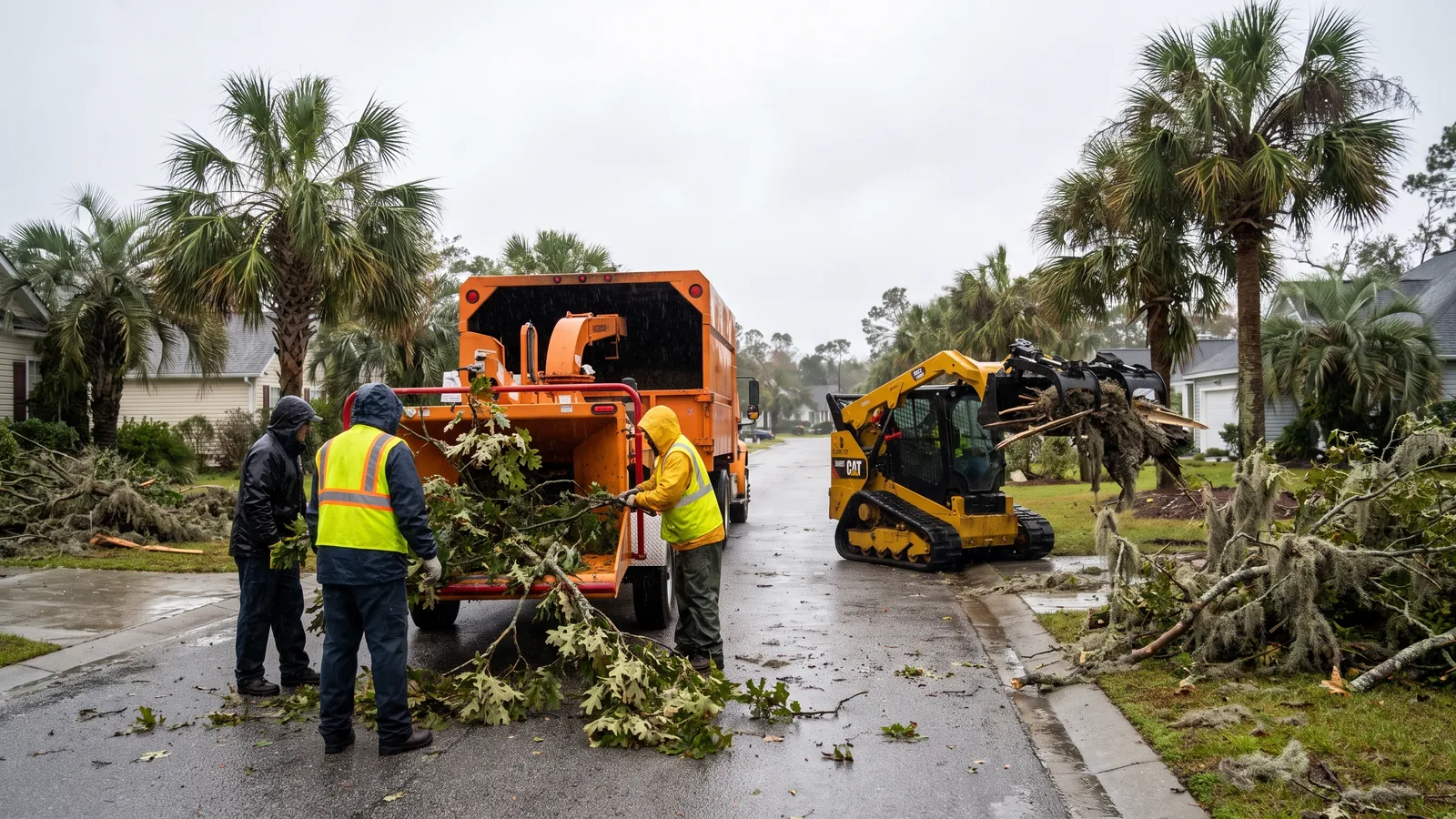
Storm cleanup on the Strand has a problem other places don't: the towns won't take the debris. Myrtle Beach's ordinance says the city won't haul stumps, trunks, branches over four inches in diameter, land-clearing debris, or anything placed at the curb by a tree or landscape contractor. North Myrtle Beach requires contractors to haul their own. After a declared disaster the county and FEMA run debris pickup with their own rules and their own timeline — weeks, usually — and the pile at the curb is a hazard and an eyesore until then. So when we do storm cleanup, we do the whole job: the tree off the fence, the hangers out of the canopy, the limbs cut and chipped, the trunk bucked and loaded, the trailer to the Horry County landfill (yard waste and clean wood, $22 a ton), the lawn raked. You're done the day we leave, not three weeks later.
The second half of storm cleanup is the trees that didn't fall. A hurricane in saturated sand racks root plates loose without tipping the tree, splits co-dominant trunks without dropping either half, and leaves hangers forty feet up that nobody notices until they come down in the next thunderstorm. Our arborist walks the property after the cut-and-haul is done and tells you honestly which of the standing trees are fine, which need a thin and a weight reduction, and which have a new lean toward the house and should come down while the storm waivers are in effect and before the next season. We photograph everything with the date for your insurance, and we invoice the emergency removal separately from the cleanup, because the carrier treats them differently.
What's included
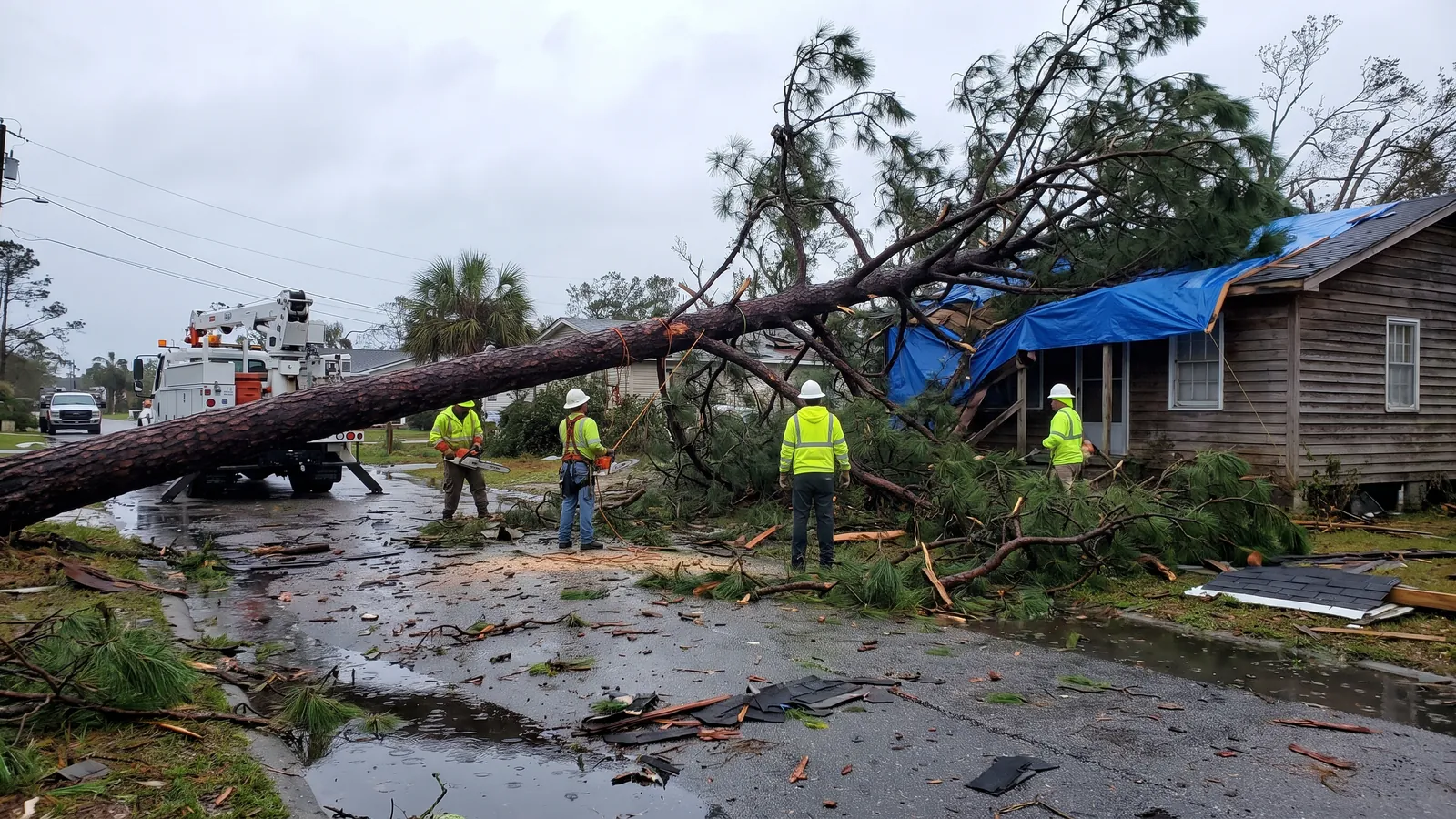
Trees off structures and fences
Cut back in sections with the weight controlled; roofs tarped if the roofer hasn't arrived.
Hangers and split trunks
The dangerous part — broken limbs caught in the canopy, taken down by a climber or from a bucket.
Cut, chip, haul
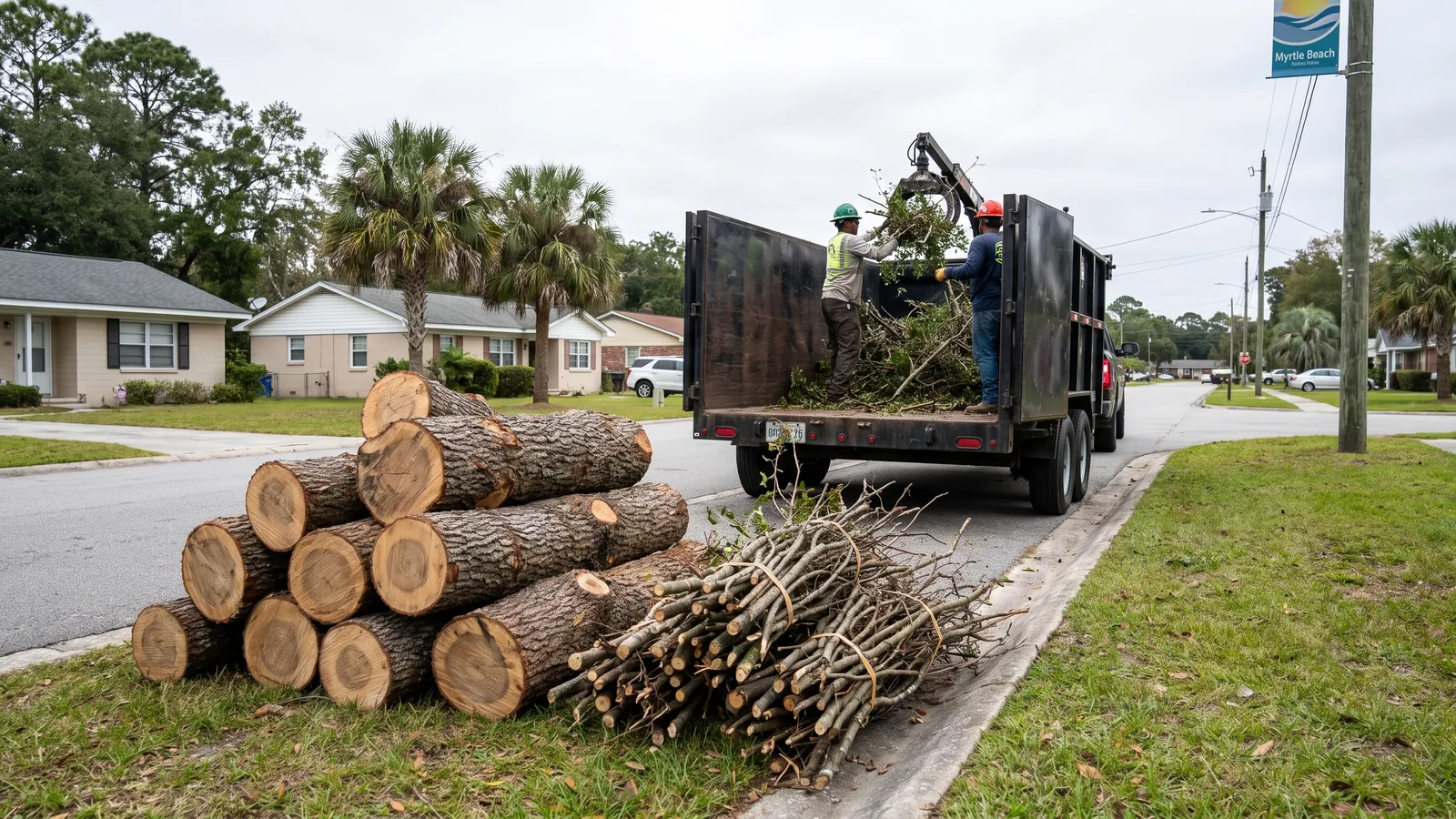
Everything to the county landfill the same day; no curbside pile waiting on the city.
Post-storm assessment
Every standing tree checked for new lean, root-plate movement and splits.
Insurance documentation
Dated photos and separate invoices for mitigation versus cleanup.
Storm waivers
Removals during a declared emergency documented so the permit office is satisfied afterward.
Storm cleanup cost in Myrtle Beach, SC
| Job | Typical price | Notes |
|---|---|---|
| Single downed tree, cut and hauled | $400 – $1,500 | Size and access |
| Hanging limb removal | $250 – $800 | Per limb |
| Whole-lot storm cleanup, typical beach lot | $1,200 – $4,000 | Several trees, hangers, haul-off |
| Acreage cleanup | Quoted per day | Crew, chipper, loader, trailers |
| Debris haul-off only (your cut pile) | $250 – $800 | Per trailer load to the landfill |
| Emergency surcharge | + 20–50% | First days after a named storm |
These are 2026 Grand Strand ranges so you can budget. Your written price is itemized — the climb or bucket work, rigging, chipping and haul-off, stump grinding, crane time, the permit for your town — and good for 30 days.
Recent work
Questions we get about storm cleanup
The city says they'll pick up storm debris. Why pay you?
They'll pick up what residents cut and stack within their size limits, on their schedule, which after a hurricane can be weeks. They won't take trunks, stumps, anything over four inches, or anything a contractor cut. If you want the yard back this week, we haul.
Can you cut it and leave it at the curb for FEMA pickup?
After a declared disaster, yes, if that's what you want — we'll cut to the county's size limits and stack it. Just know the pile may sit a while, and the city rules above still apply to contractor-cut debris outside the disaster program.
A tree is leaning on the house but hasn't fallen. Is that cleanup or emergency?
Emergency. Call and we'll dispatch by priority. Cleanup is what happens after it's off the house.
Do I need a permit to remove a storm-damaged protected oak?
During a declared emergency, the towns waive it. Otherwise a split or leaning landmark oak is a hazard removal with an arborist's documentation, which we provide. Photograph it before anything is cut.
Will you take the trees that are still standing but look bad?
If they've earned it. Our arborist checks each one after the cleanup and tells you which to keep, which to prune and which to remove — and we're honest about the ones that are fine.